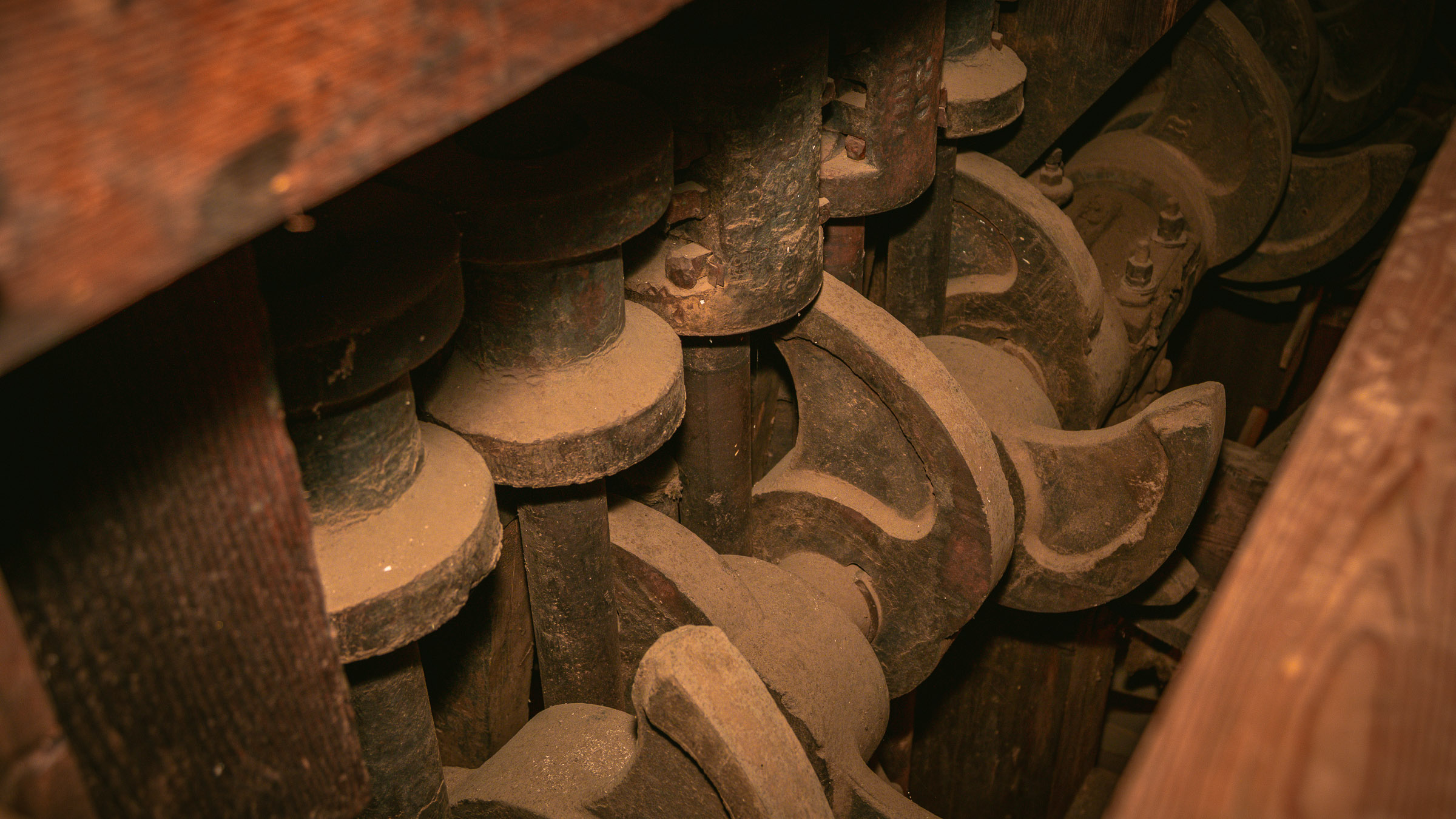
Feature Photo: Historic stamp mill machinery inside Paris Mill near Alma, Colorado. Photography by Mt. Bailey Productions.
Hidden inside the historic Paris Mill near Alma, Colorado, are towering pieces of industrial machinery that once played an essential role in processing ore from the surrounding mountains. Among the most fascinating are the heavy vertical metal rods and mechanical components that formed part of the mill’s ore-crushing system.
At first glance, these massive metal structures might resemble an intricate collection of pipes, shafts, and industrial equipment. In reality, they represent an important chapter in Colorado’s mining history.
These components appear to be part of a historic stamp mill, a powerful machine designed to crush rock into smaller particles so valuable minerals could be recovered.
In our previous Paris Mill Artifact Series article, we explored a massive Fraser & Chalmers mortar box discovered among the equipment on the property. Now, we’re taking a closer look at the machinery that made the crushing process possible.
⛏️ What Was a Stamp Mill?
Before valuable minerals such as gold and silver could be recovered from ore, the surrounding rock often needed to be broken apart.
During Colorado’s mining era, stamp mills provided a mechanical solution to this challenging and labor-intensive task.
A stamp mill used a series of heavy metal stamps that were repeatedly lifted and dropped onto ore. The force of each impact crushed the rock into progressively smaller fragments, allowing the material to move through additional processing stages.
These machines were an important advancement over crushing rock entirely by hand. Depending on their size and configuration, stamp mills could process substantial quantities of ore through repeated mechanical impacts.
At Paris Mill, surviving equipment provides a fascinating glimpse into the industrial technology used in the Mosquito Range mining district.
⚙️ What Are Those Massive Metal Rods?
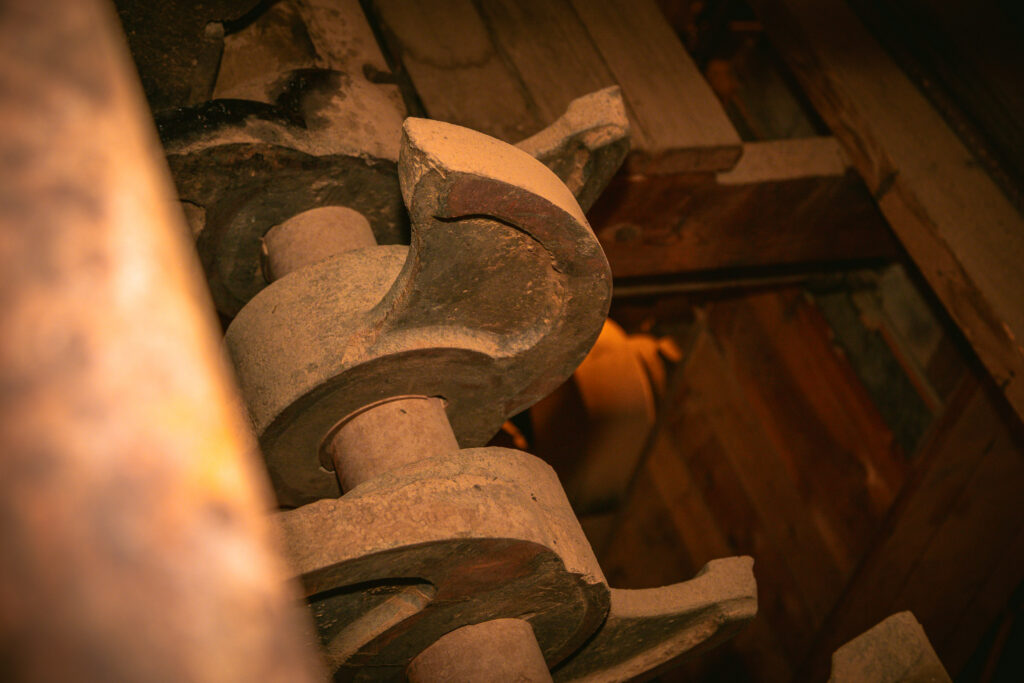
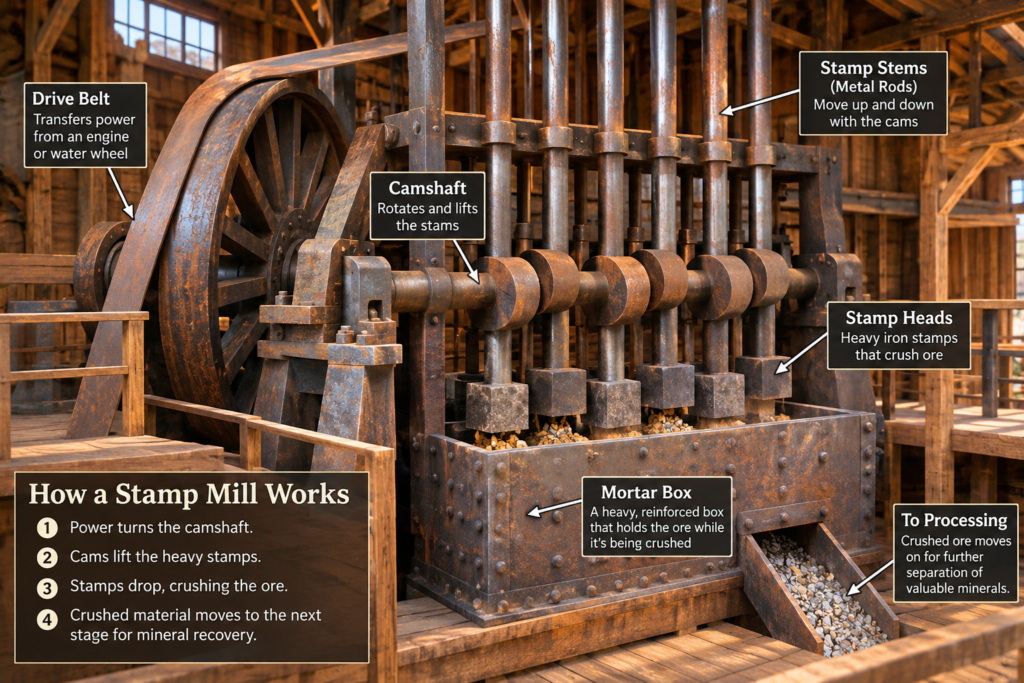
One of the most recognizable features of a traditional stamp mill is its series of tall, vertical metal rods, commonly called stamp stems.
Each stamp stem was connected to a heavy crushing head at its lower end. Together, these components formed the moving portion of the crushing mechanism.
The stems were guided vertically through the machinery so that the stamps could repeatedly rise and fall in a controlled motion.
A rotating camshaft operated the system. As the shaft turned, specially shaped cams engaged components attached to the stamp stems, lifting the heavy stamps upward.
Once released, gravity pulled the stamps downward, delivering a powerful blow to the ore below.
This process repeated continuously while the machinery operated, creating the rhythmic pounding sound historically associated with stamp mills.
The vertical components visible inside Paris Mill appear consistent with this type of crushing equipment, although their exact configuration should be confirmed through historical documentation.
🔨 How Did the Crushing Process Work?
Although the machinery appears complicated, the basic operating principle of a stamp mill was relatively straightforward.
The Stamp Mill Crushing Process
-
Ore entered the mill. Rock containing valuable minerals was transported from nearby mining operations and delivered for processing.
-
Ore was fed into the crushing system. Material entered a heavy container called a mortar box beneath the stamps.
-
Mechanical power lifted the stamps. A rotating camshaft raised the heavy stamp heads through a series of mechanical connections.
-
Gravity crushed the rock. The stamps dropped repeatedly onto the ore, breaking it into smaller particles.
-
Crushed material passed through screens. Once sufficiently reduced, the material could leave the mortar box and continue to other processing equipment.
-
Minerals were recovered. Additional separation methods were used to recover valuable minerals from the crushed material.
The process required substantial mechanical power and equipment capable of withstanding repeated impacts.
Heavy iron and steel components were essential to the system’s durability, which helps explain why some pieces have survived long after the mill ceased operating.
🏭 Connecting the Stamp Mill to the Fraser & Chalmers Mortar Box
In May 2026, the South Park National Heritage Area shared photographs of a massive industrial artifact resting on the Paris Mill property.
The structure was marked with the manufacturer’s name:
Fraser & Chalmers, Chicago, Ill., No. 4
With help from mining historians and community members, the artifact was identified as what is likely a stamp mill mortar box.
The mortar box served as the heavy container where ore was crushed beneath the falling stamps.
Understanding the relationship between the mortar box and the stamp mechanism helps bring these surviving artifacts together.
The vertical stamp stems and crushing heads provided the repeated impact, while the mortar box contained the ore and withstood the force of the crushing process.
Together, these components illustrate how industrial machinery transformed large pieces of mineral-bearing rock into material suitable for further processing.
While additional research would be needed to determine whether the surviving Fraser & Chalmers mortar box was originally connected to the specific stamp machinery photographed inside Paris Mill, both offer valuable insight into historic ore-crushing technology.
Related Article: What Is This Massive Steel Structure at Paris Mill?
⚡ What Powered the Stamp Mill?
Stamp mills required a reliable source of mechanical energy to keep their heavy components moving.
Historic mills used various power systems, including water power, steam engines, and eventually electric motors.
Power could be transmitted through rotating shafts, large pulleys, and heavy belts that connected different pieces of equipment.
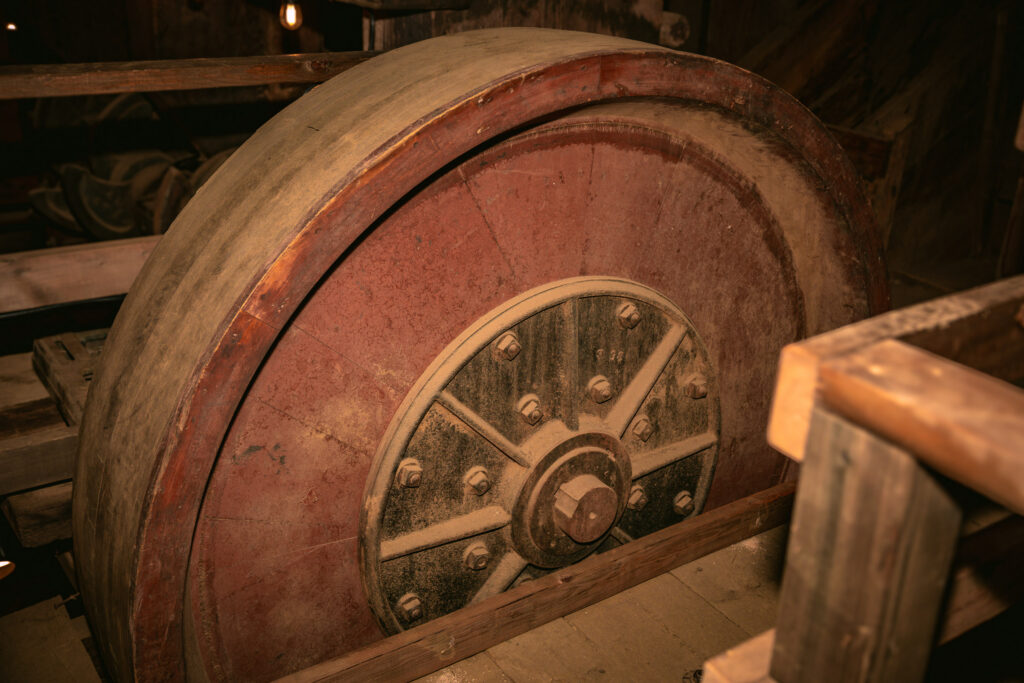
Inside Paris Mill, a large wooden wheel and other surviving mechanical components offer another opportunity to explore how industrial power was distributed throughout the facility.
Although the exact function of the wooden wheel requires further verification, large belt-drive pulleys were commonly used in historic industrial machinery.
These systems made it possible to transfer energy from a central power source to equipment operating elsewhere in the building.
We’ll explore the history and operation of this type of machinery in a future Paris Mill Artifact Series feature.
🏔️ Why the Stamp Mill Matters to Paris Mill’s History
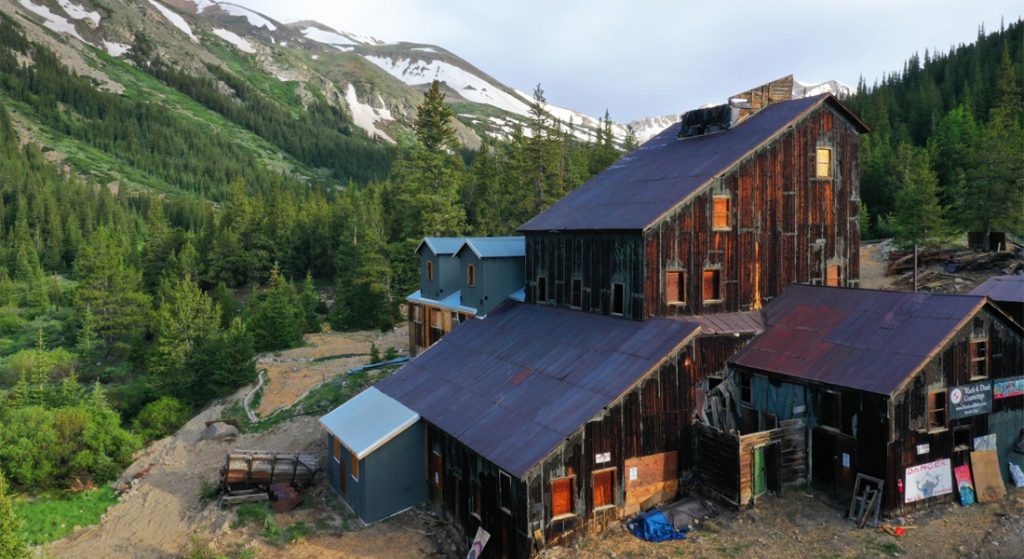
Located in the mountains near Alma, Paris Mill is an important surviving reminder of the industrial mining activity that helped shape Park County and the surrounding Mosquito Range.
Mining history is often told through stories of prospectors, underground tunnels, and the discovery of valuable minerals. However, extracting ore from the ground was only one part of the process.
Mills played an equally important role by transforming mined rock into material from which valuable minerals could be recovered.
The machinery required to accomplish this work was enormous, mechanically complex, and built to endure demanding operating conditions.
Today, the surviving stamp mill equipment provides a physical connection to the people, engineering, and industrial processes that supported Colorado’s mining communities.
Preserving these artifacts helps future generations understand not only what miners were searching for, but also the remarkable machinery required to process what they found.
🚧 Preserving the Machinery Inside Paris Mill
Unlike equipment displayed in a modern museum, much of the machinery at Paris Mill remains within the historic industrial setting where it was used or later stored.
This provides an opportunity to understand the equipment in the context of the larger mill complex.
Preservation efforts are important because historic industrial sites face challenges from weather, structural deterioration, and the passage of time.
Documenting surviving machinery through photography, historical research, and virtual interpretation helps preserve knowledge about how these systems operated.
Paris Mill is not currently open for public interior exploration. Visitors should respect site restrictions and avoid entering historic structures or climbing on machinery.
🔍 Explore More of Paris Mill’s Industrial History
The massive stamp mill machinery inside Paris Mill represents just one part of the complex process that transformed ore into valuable minerals.
From the heavy stamps that crushed rock to the pulleys and mechanical systems that powered the equipment, each surviving artifact helps tell a larger story.
The South Park National Heritage Area continues to highlight these remarkable pieces of Park County’s industrial heritage through photography, historical interpretation, and educational resources.
As the Paris Mill Artifact Series continues, we’ll take a closer look at additional equipment and the technology that once helped power mining operations high in Colorado’s mountains.