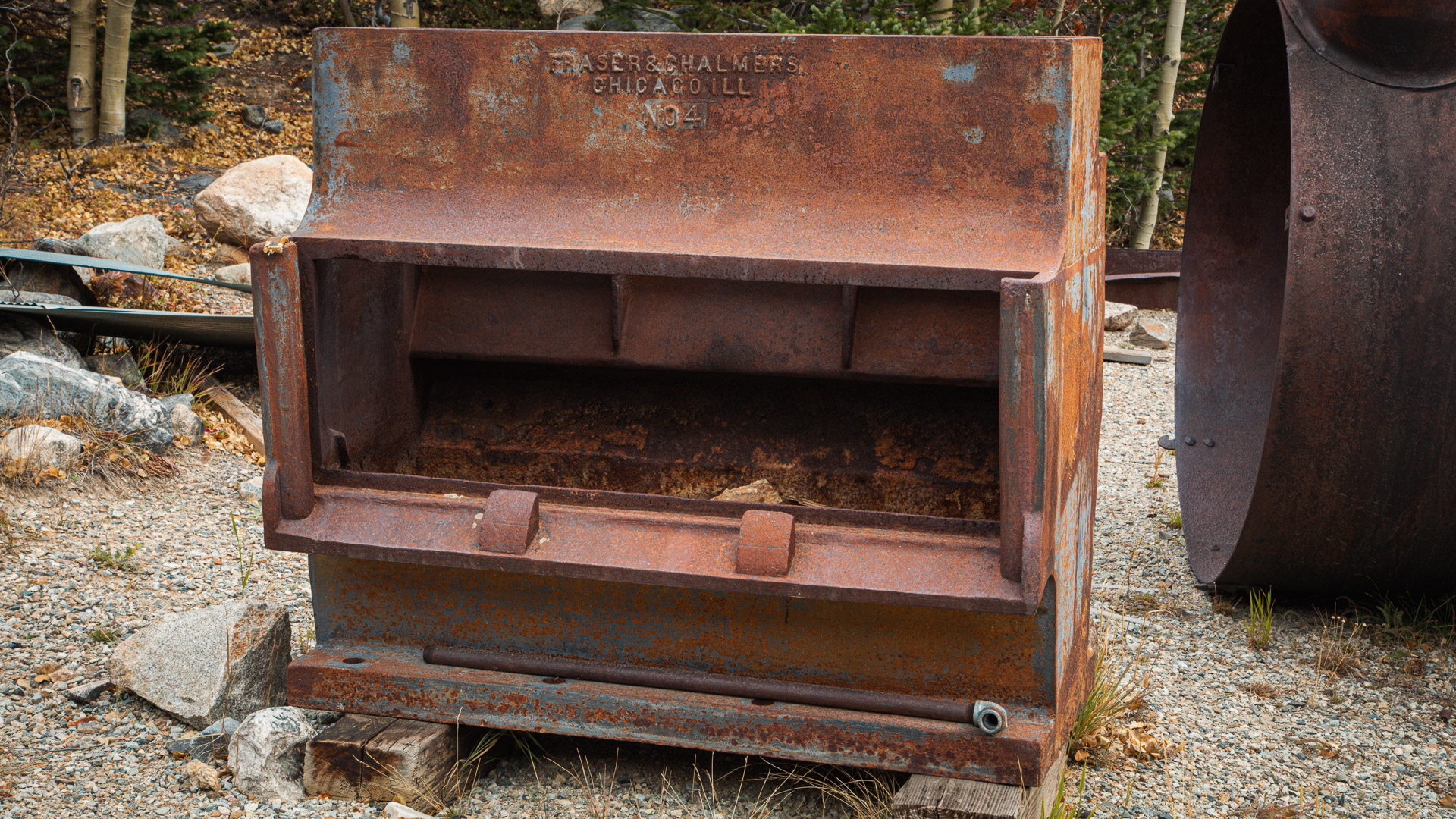
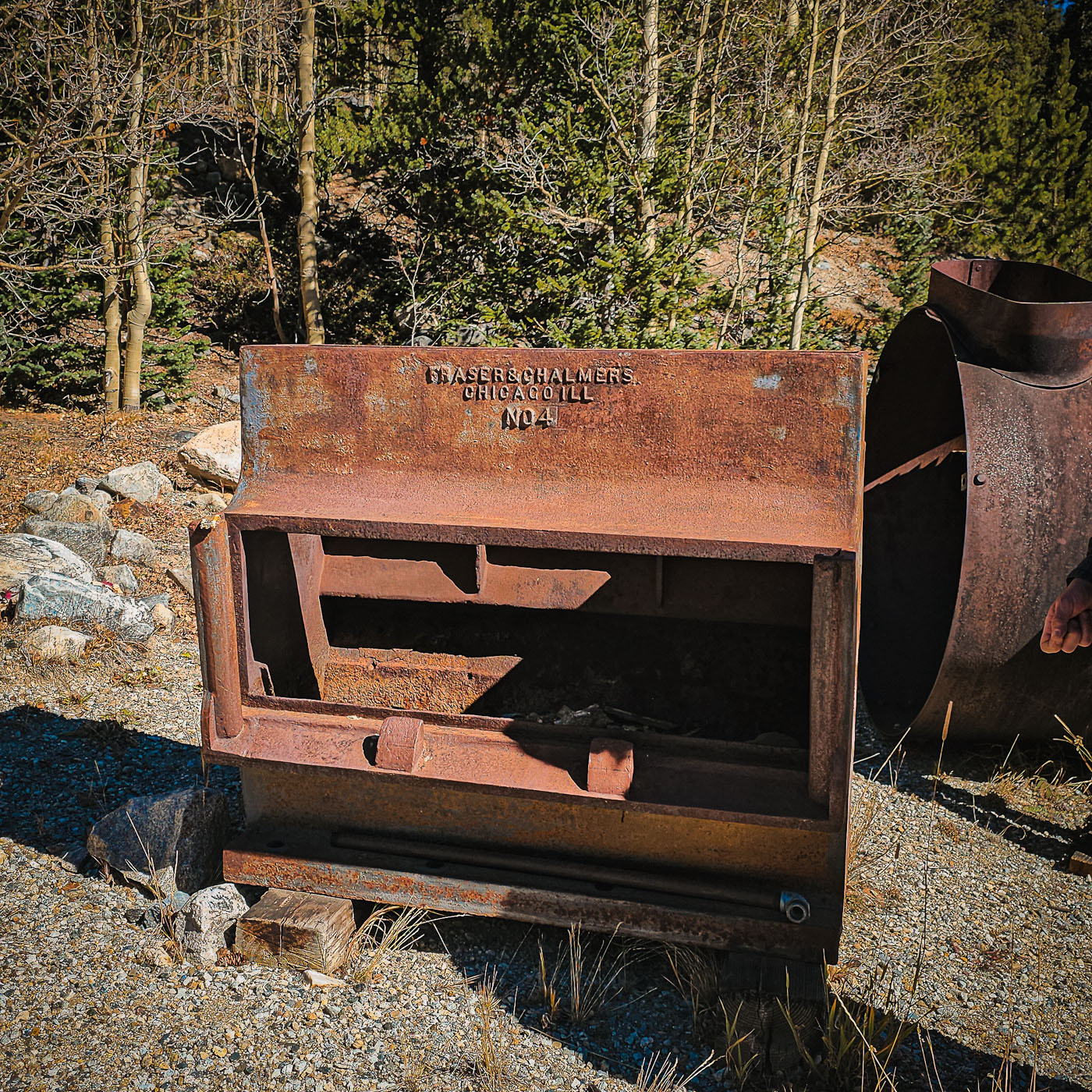
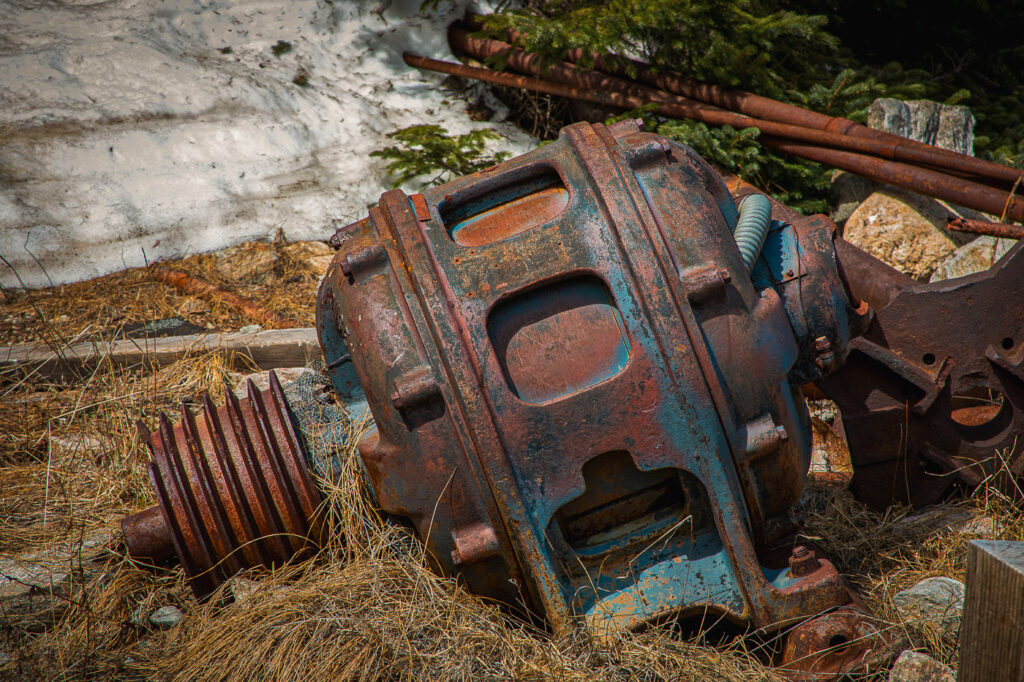
Feature Photo: Historic Fraser & Chalmers stamp mill mortar box located at Paris Mill near Alma, Colorado.
Scattered across the historic grounds of Paris Mill near Alma, Colorado, visitors can find massive rusted pieces of mining equipment resting among the mountains and trees. Some artifacts are easy to recognize, while others look more like giant industrial puzzles left behind from another era.
One of the most recognizable pieces on the property is a large steel structure stamped with the words:
Fraser & Chalmers – Chicago, Ill. – No. 4
After sharing photos online, mining historians and local followers helped identify the artifact as what is likely a stamp mill mortar box, also called a stamp box, once used as part of a powerful ore crushing system.
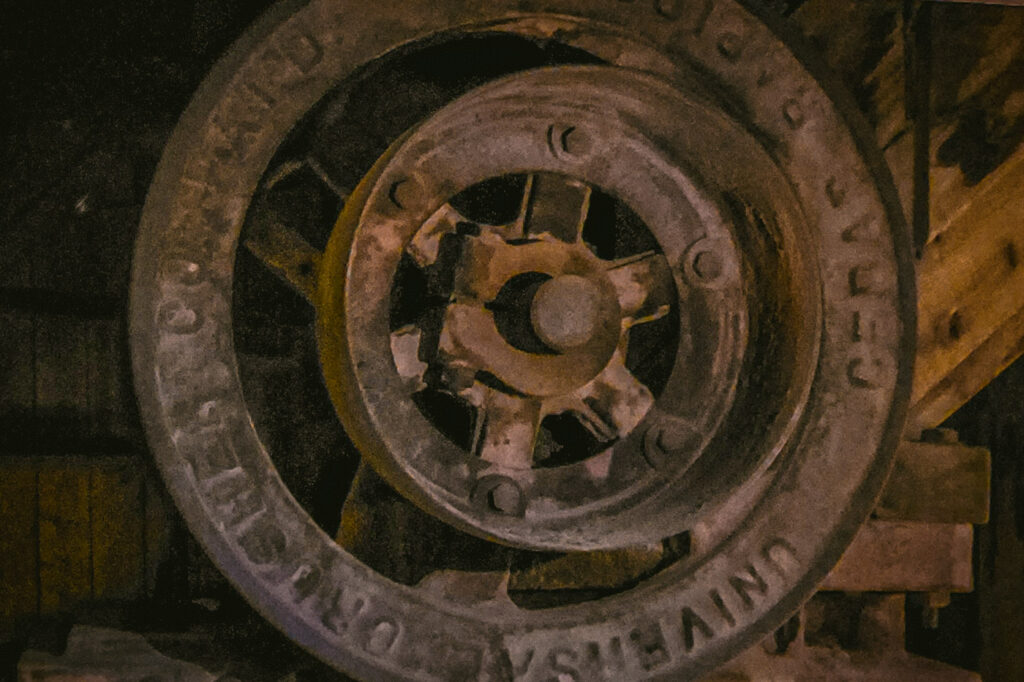
This piece is just one of many industrial remnants still scattered throughout Paris Mill today.
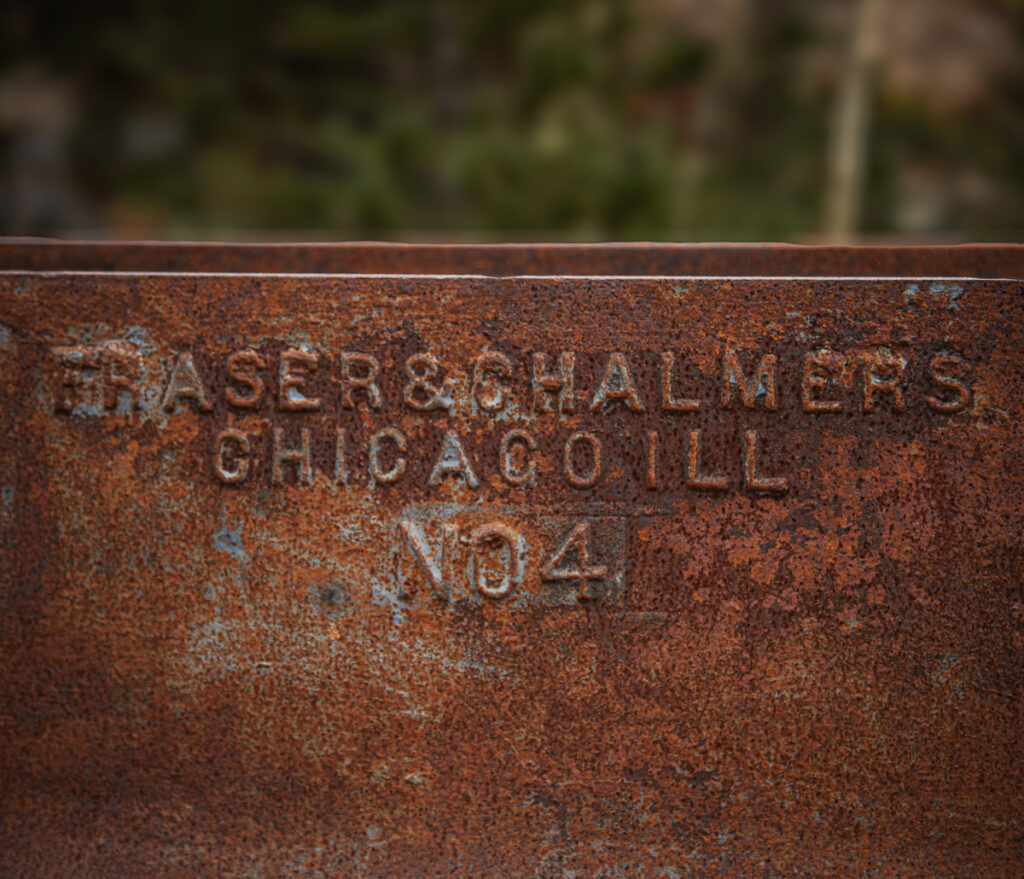
The cast iron lettering identifies the machinery as equipment manufactured by Fraser & Chalmers of Chicago.
The company supplied mining machinery across the American West during the height of Colorado’s mining era.
⛏️ What Was a Stamp Mill?
During Colorado’s mining boom, stamp mills were used to crush ore extracted from nearby mines. These mills operated using enormous steel stamps that repeatedly dropped onto rock to break it apart and expose valuable minerals like gold and silver.
The crushing took place inside a heavy steel container called a mortar box. The structure photographed at Paris Mill appears to be one of those surviving components.
These boxes had to withstand repeated impacts from extremely heavy steel stamps operating continuously for long periods of time. Because of this, the equipment was built from thick cast steel and iron, which explains why pieces like this have survived for more than a century in Colorado’s mountain climate.
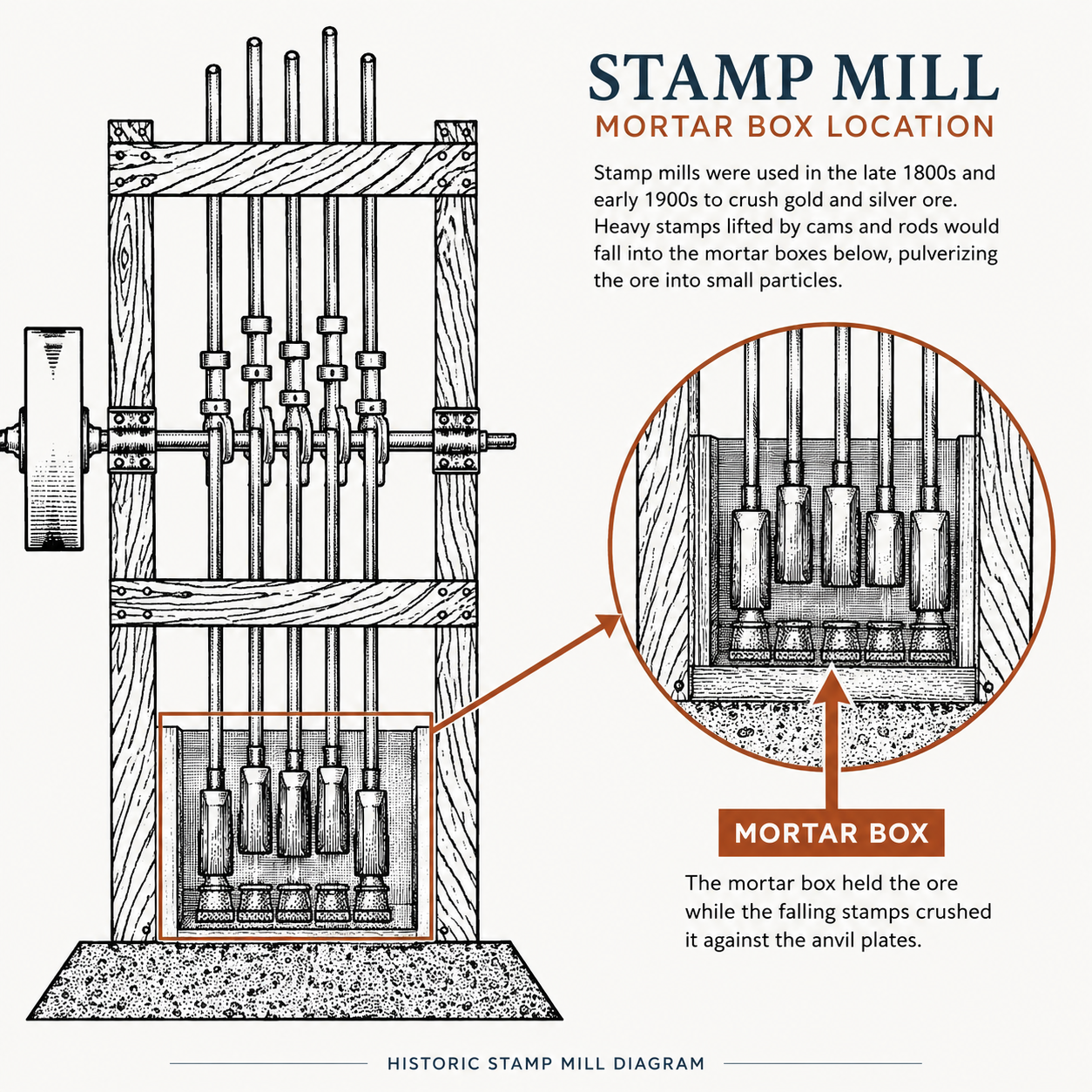
A simplified rendering helps show how the surviving mortar box fit into a complete stamp mill crushing system.
⚙️ How Did It Work?
Stamp mills relied on repeated impact to crush ore into smaller material that could then be processed for valuable minerals.
Basic Stamp Mill Process
- Ore was brought into the mill from nearby mines
- Heavy steel stamps repeatedly dropped onto the rock
- The mortar box absorbed the crushing force
- Crushed ore moved through screens for processing
- Valuable minerals were separated from waste rock
Surviving pieces like this help visitors visualize how the system once operated.
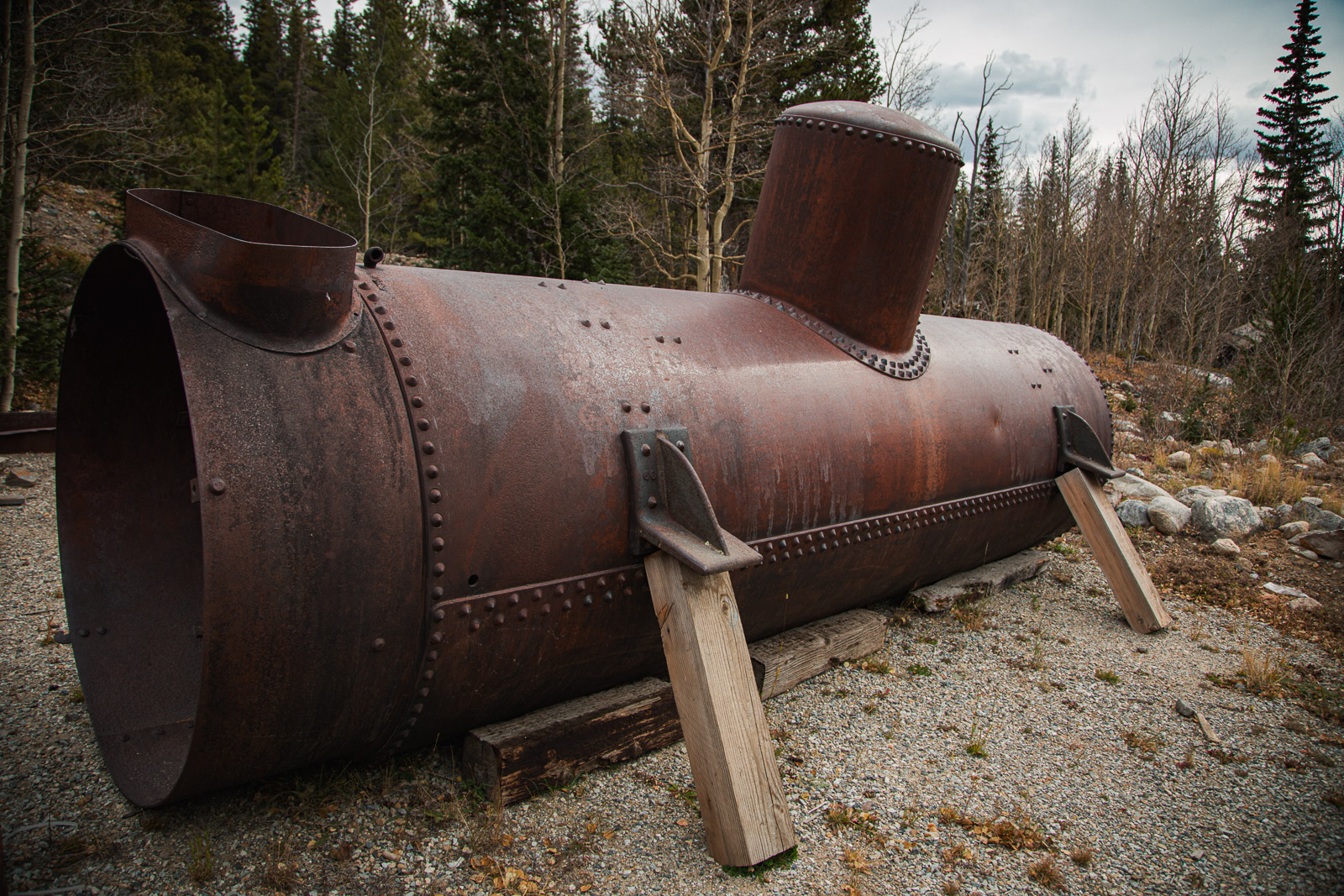
Today, portions of the original milling equipment remain scattered throughout the Paris Mill property.
🏔️ Why Paris Mill Matters
Located near Alma in Park County, Paris Mill is one of Colorado’s most recognizable historic mining sites. The complex includes remnants of industrial structures, ore processing equipment, foundations, and machinery connected to the rich mining history of the Mosquito Range.
Many visitors notice the towering mill structure immediately, but smaller artifacts throughout the property often tell equally fascinating stories.
Large pieces of machinery like this mortar box help visitors imagine the scale, noise, and intensity of mining operations that once took place high in the Rockies.
One of the most interesting parts of sharing artifacts like this online is seeing the local history community come together to help identify them.
After photos of the object were posted by the South Park National Heritage Area, several followers shared their thoughts identifying it as a stamp mill mortar box.
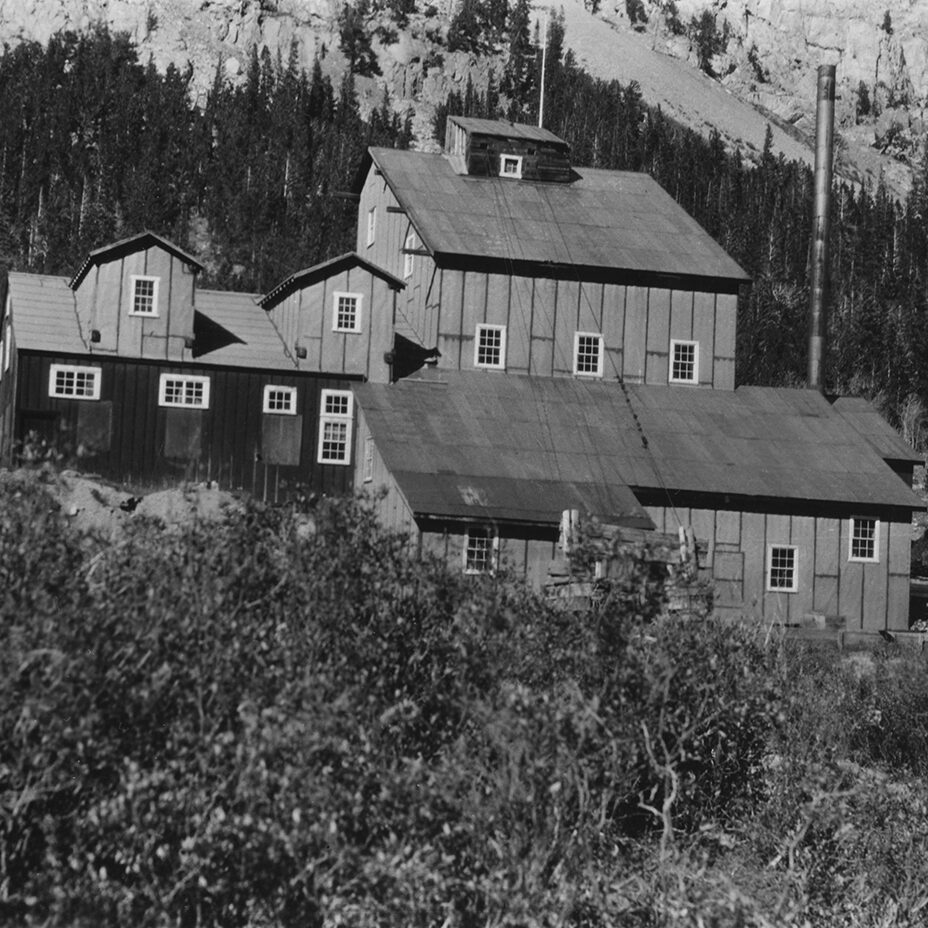
📸 Historic photo courtesy of the Park County Local History Archive Photographic Collection, Paris Mill Folder, item no. 2967 (1928).
🔍 Community Knowledge Helped Identify It
After photos of the object were shared online, followers commented with possible identifications including:
Stamp mill hammer box.
This is a stamp box at the base of a stamp mill.
Stamp Mill Mortar.
Community knowledge continues to play an important role in preserving and understanding Park County’s mining heritage.
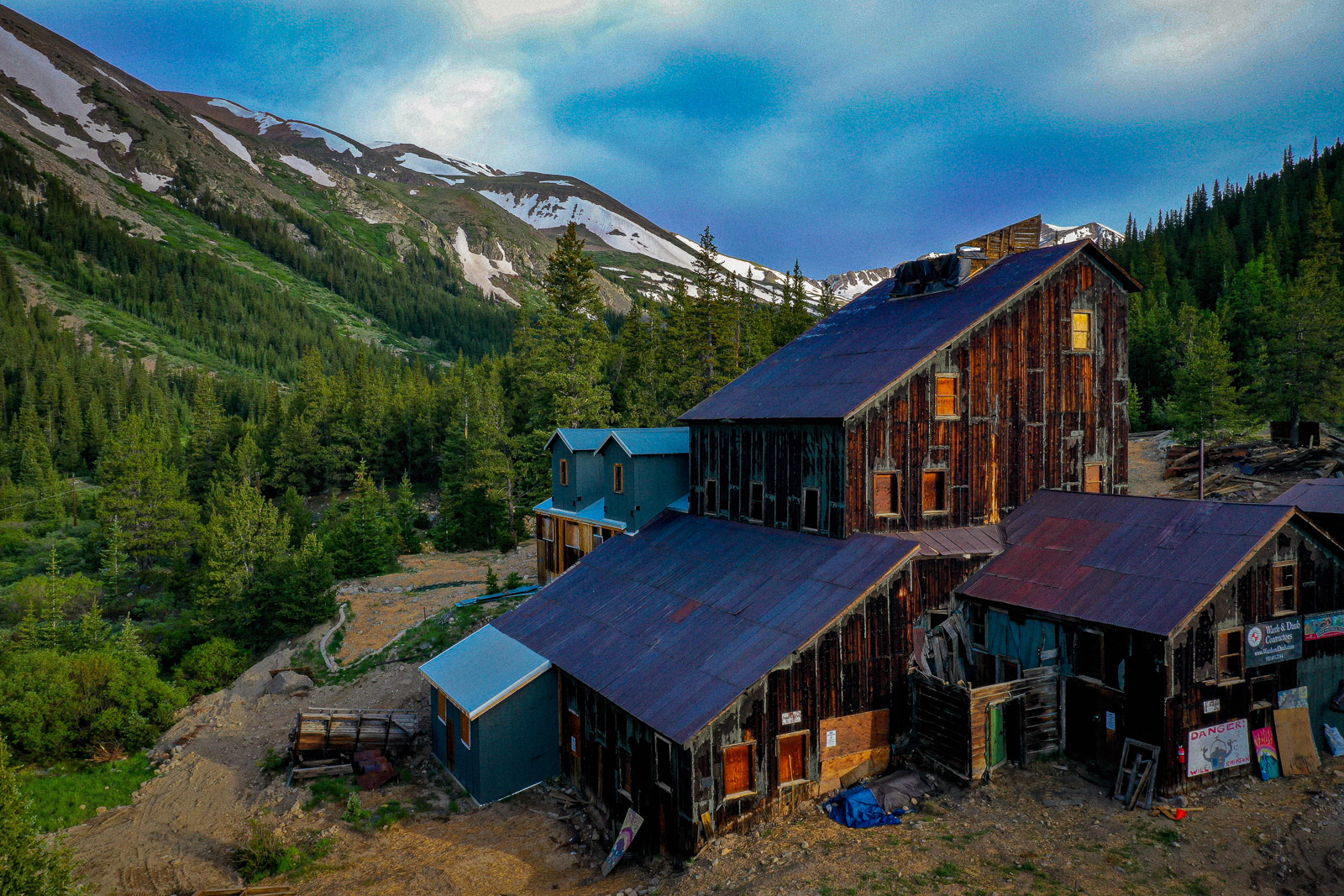
Paris Mill remains one of the most visually striking reminders of Colorado’s mining era.
🚧 Can You Go Inside Paris Mill?
At this time, visitors are not permitted inside Paris Mill itself. However, there is ongoing hope that portions of the site may eventually become more accessible in the future through preservation and restoration efforts.
Even from the outside, the property remains an incredible place to appreciate Colorado’s mining history and observe the scale of industrial equipment still scattered throughout the landscape.
Visitors should always respect closures, avoid climbing on historic structures or machinery, and help preserve these fragile sites for future generations.
🌲 A Landscape Filled With Mining History
One of the most fascinating aspects of Paris Mill is that history is not confined to a museum display or a single building. Industrial artifacts can still be found throughout the property, each representing a different piece of the ore processing system that once operated here.
This mortar box is only one example.
Future articles may explore additional machinery, foundations, structural remnants, and industrial components still visible around Paris Mill today.
🔍 Paris Mill Artifact Series
This article is part of an ongoing series exploring historic machinery and mining remnants found around Paris Mill near Alma, Colorado.

Future features may include:
- Ore carts
- Mill foundations
- Structural remnants
- Processing equipment
- Industrial machinery
- Historic mining artifacts